Search This Blog

Showing posts with label Joe Paterno. Show all posts

Friday, January 4, 2013

In Memoriam 2012

Every year the sports world says goodbye to people that made differences in the games that entertain us. The Daily Hat Trick looks back at 12 people that passed away last year who won't soon be forgotten by sports fans who remember them at their most influential.

JANUARY 2012

Joe Paterno

1
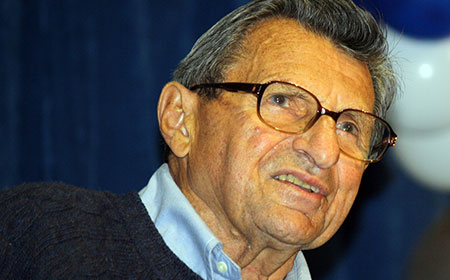
Joe Paterno died this past January 22 of lung cancer at age 85, though most believed a broken heart hasted his passing. One of the greatest coaches in the history of college football, Paterno won more games as Head Coach than any other coach in the history of Football Bowl Subdivision NCAA college football. Paterno won two National Championships, in 1982 and 1986. He led the Penn State Nittany Lions to perfect seasons in 1968, 1969, 1986, and 1994.

On the Penn State coaching staff during 62 seasons, Paterno spent 56 seasons at Head Coach. Paterno was inducted into the College Football Hall of Fame in 2007. His tenure came to an abruptly in 2011. He was quickly fired on November 8, 2011, three days after longtime defensive assistant Jerry Sandusky was indicted on dozens of counts of child sexual abuse.

The NCAA erased any evidence of Paterno's existence from 1998 through his termination in 2011 even though the world was there to witness it. This officially dropped Paterno to out of the top 10 winningest coaches in FBS history, though he was on the sidelines during 409 different contests in which the team he coaches had the higher score at the end of the game. 


FEBRUARY 2012

Gary Carter

2
Gary Carter died this past February 16 of brain cancer. He was 57. Carter played catcher for 18 years in Major League Baseball, most with the Montreal Expos. He was an 11 time All-Star, three time Gold Glove winner, and finished third in National League MVP voting in 1986.

Carter will probably be best remembered for his heroics with the World Series winning 1986 New York Mets. Carter was the starting catcher on that team. His hit in the bottom of the 10th inning of Game 6 of the 1986 world Series against the Boston Red Sox started the rally that ended with the infamous Bill Buckner error that kept the Mets alive and enabled them to win the series in seven games.


March 2012

Julio Cesar Gonzalez


3
Julio Cesar Gonzalez died this past March 10 in a motorcycle accident. He was 35. The Mexican fighter won 41 fights in his professional career. He lost by decision to Roy Jones, Jr. in a fight for the undisputed light heavyweight championship in 2001. Gonzalez won the WBO light heavyweight championship in 2003, losing it in his first defense of the title to Zsolt Erdei in 2004. He would unsuccessfully challenge in three more IBF title fights. His last fight was in September of 2011.     


April 2012

Ray Easterling

Easterling with the Atlanta Falcons in 1978. 4
Ray Easterling died this past April 19 of a self inflicted gunshot wound. He was 62. Easterling played safety with the Atlanta Falcons for 8 years in the NFL, from 1972 through 1979. While his playing career was longer than average, it was otherwise unremarkable. Easterling's death is significant because his suicide was the latest in a disturbing pattern of retired NFL players taking their lives while suffering from symptoms of chronic traumatic encephalopathy (CTE), damage caused from repeated blows to the head. Easterling was suffering from dementia and chronic depression at the time of his death. Easterling was part of the class action lawsuit by retired players against the NFL filed by former Chicago Bears quarterback Jim McMahon and others.


May 2012

Junior Seau


5
Junior Seau died this past May 2 of a self inflicted gunshot wound. He was 43. Seau was the fifth pick in the 1990 NFL Draft by the San Diego Chargers. He played for 20 seasons at linebacker in the NFL, including 13 with the Chargers. The future Pro Football Hall of Fame inductee was a 12 time Pro Bowler, 8 time Associated Press First Team All Pro, played in two Super Bowls (XXIX, XLII), and is a member of the NFL's 1990s All Decade Team.

Less than two years before his death, Seau drove his car off of a 100 foot cliff in California. Seau said he fell asleep at the wheel. He suffered minor injuries. Seau's family dontated his brain tissue for research after his death. While the results were never made public, it was reported that he suffered from symptoms of CTE.


June 2012

Vladimir Krutov


6
Vladimir Krutov died this past June 6 of a stomach ailment. He was 52. Krutov, a member of the International Hockey Federation Hall of Fame and three Soviet Olympic hockey teams, was considered one of the best wingers of his time. He won two Olympic Gold gold medals (1984, 1988) and a silver medal (1980). He was among the first wave of Soviet players to play in the NHL, joining the Vancouver Canucks during one season in 1989.

The event that Americans may best remember associated with Krutov is the 1980 "Miracle on Ice" game against the United States in Lake Placid, New York. Krutov scored a goal early in the game, but committed a penalty in the third (and final) period of the game that resulted in a power play in which the USA was able to tie the score before going ahead to win.


July 2012

Ben Davidson


7
Ben Davidson died this past July 2 of prostate cancer. He was 72. At 6 feet 8 inches tall, the defensive lineman was one of the original "Big Bens" of pro football. Davidson played for 11 years between the NFL and AFL, playing eight years for the Oakland Raiders. Davidson was a three time AFL All-Star and a member of the Raiders 1967 AFL Championship team that lost to the Green Bay Packers in Super Bowl II.


August 2012

Steve Van Buren

8
Steve Van Buren died this past August 23 of pneumonia. He was 91. Van Buren was the fifth pick in the 1944 NFL draft out of LSU. He played for eight seasons, all with the Philadelphia Eagles. Van Buren was a seven time All-Pro selection, won the rushing title four times in five years (1945, 1947-1949), is a two time NFL champion (1948, 1949) and retired after the 1951 season as the NFL's all time leading rusher. Van Buren is a member of the Pro Football Hall of Fame.


September 2012

Art Modell

9
Art Modell died this past September 6 after a long history of heart disease. He was 87. Modell was the owner of the Cleveland Browns franchise from 1961 through the end of the 1995 season. The NFL officially recognized the Modell's franchise as the Baltimore Ravens, a new entity, beginning in the 1996 season. Modell owned the Ravens until 2004.

Under Modell's ownership, the Browns were NFL champions in 1964 and the Ravens won Super Bowl XXXV during the 2000 NFL season. Modell will be remembered as a hero in Baltimore and a reviled villain in Cleveland for moving his franchise from Cleveland to Baltimore after the 1995 season, citing financial distress.


October 2012

Alex Karras

10
Alex Karras died this past October 10 of kidney failure. He was 71. Karras was the 10th pick in the 1958 NFL Draft by the Detroit Lions. He played defensive tackle for 12 seasons with the Lions, playing his last game in his only career playoff game in a loss to the Dallas Cowboys in the 1970 season. Karras was a four time Pro Bowler and a three time First Team All Pro. He is a member of the NFL's 1960's All Decade Team and the College Football Hall of Fame. Karras was also well known for playing the father on the popular television sitcom, "Webster" in the 1980s.


November 2012

Marvin Miller

11
Marvin Miller died this past November 27 of liver cancer. He was 95. Miller, by most informed accounts, is one of the five most influential people in Major League Baseball in the last 100 years. He was the Executive Director of the Major League Baseball Players Association from 1966 until 1982. During that time, the MLBPA evolved into one of the most powerful labor unions in America.

Miller negotiated the first MLBPA collective bargaining agreement with MLB in 1968. In 1974, he helped implement the strategy that led to the end of Major League Baseball's reserve clause, ushering in the beginning of unrestricted free agency in baseball. Player salaries increased 25-fold during Miller's tenure.


December 2012

Jerry Brown

12

Jerry Brown died this past December 8 from injuries sustained in an automobile accident. He was 25. Brown was a linebacker on the Dallas Cowboys' practice squad at the time of his death. He was a passenger in a car driven my his teammate and best friend, Josh Brent. Brown played in one NFL regular season game earlier this season with the Indianapolis Colts. Brown also played in the Arena Football League and Canadian Football League. Brown was an Arena Bowl XXIV champion with the Jacksonville Sharks in the 2011 AFL season.

1) Image from www.socialelements.net
2) Image from www.silive.com
3) Image from www.wikipedia.org
4) Image from www.spokeo.com
5, 10) Image from http://abcnews.go.com
6) Image from http://sports.yahoo.com
7) Image from www.nfl.com
8) Image from http://nfluniforms.blogspot.com
9) Image from www.canyon-news.com
11) Image from www.alan.com
12) Image cited in a prior edition of The Daily Hat Trick

Tuesday, October 9, 2012

Slamming the Door on Slammer-dusky


I've watched enough MSNBC prison specials to know that they will not be stroking Sandusky's head lovingly. 1

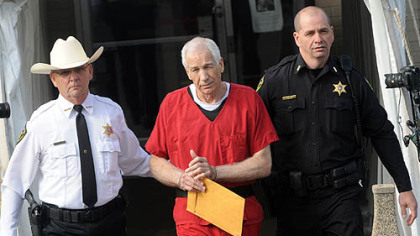
Former Penn State University defensive coordinator and convicted child molester Jerry Sandusky was sentenced to 30 to 60 years in prison this morning. The lengthy sentence all but assures that the 68 year old Sandusky will spend the rest of his deplorable, parasitic life in prison.

CLOSURE

I don’t know if there can ever be complete closure on this tragedy. There were several victims that testified against Sandusky at his trial earlier this year, but the number of actual victims scarred for life by Sandusky may never be known. Still, any victims, known or unknown can go to sleep at night knowing that the man responsible for abusing them while in a position of trust will never see the light of day again from outside of a prison wall.

Sandusky's sentence: 30 to 60 years in prison
Have fun where you're going! 3
CARNAGE

Sandusky was convicted and sentenced for violent sex offenses against children, whose wounds may never completely heal. However, the damage caused by Sandusky’s vile, disgusting proclivities reach far beyond the victims he physically touched. The entire community of State College, Pennsylvania was rocked in a manner that nobody will ever forget.

Shortly after the fallout of the Sandusky indictment began to come to a head in the media, Joe Paterno, who spent 61 years as a coach in the Penn State football program, 46 years as Head Coach, was fired quickly, unceremoniously, and without notice for his failure to act following a board meeting of the Penn State trustees last November. University President Graham Spanier also resigned that evening in lieu of termination. Soon thereafter, it was announced that Paterno was being treated for lung cancer. Paterno died on January 22, 2012 at the age of 85.

While Paterno was very advanced in age at the time of his death, and while lung cancer is a serious disease with a very low five year survival rate, many, myself included, speculated that Paterno died so quickly because of a broken heart, perhaps losing the will to live after job synonymous with his very identity was taken from him. The statue of Joe Paterno, which stood in front of Beaver Stadium, was removed this past July after an independent report revealed the degree of Paterno’s complicity in covering up Sandusky’s indiscretions.

The NCAA vacated 111 Penn State wins between 1998 and 2011. Those wins were stricken from Paterno’s coaching record. The university was fined $60 million by the NCAA and was banned from any bowl appearances for the next four seasons. While the university is responsible for its own cover-ups, the fallout from those cover ups, and the permanent stain on its reputation and Joe Paterno is responsible for his failures, etc., the twisted, predatory tactics of Sandusky was what made the collapses and falls from grace by everyone involved possible.

Say goodbye to Statue Joe. 2
REACHING BEYOND THE DIRECTLY AFFECTED

Of course, with far less buzz surrounding the Penn State football program, businesses that profited heavily on Saturdays in the fall on which Penn State had a home football game are not faring as well as they did last season. The team is gong nowhere for the next four seasons, no chance of a bowl appearance. This is going to drain the energy and enthusiasm of even the most die hard college football fan in Happy Valley.

The Penn State community and the surrounding area in State College, PA, has had its reputation ruined, immediately associated with a repeat offender of one of the most heinous crimes committed by man. Paterno’s legacy, left to his family to carry on, has been damaged beyond recognition and repair in spite of over 60 years of leading a successful football program.

Sandusky’s family, who was not involved in his crimes, will carry a black cloud over it’s head no matter where they go. Sandusky didn’t just throw away his own life because of his sexual sickness. He took the entire Penn State community with him.

Better you than me, young lady! 4
Don't forget to vote in the fan polls!

To advertise with The Daily Hat Trick, or to submit a guest column, please contact the editor at eric@thedailyhattrick.info.

The Daily Hat Trick is sponsored by Sports N Stuff. For great deals on jerseys, shirts, cologne, and other guy stuff, visit http://www.sportsnstuff.biz/.

1) Image from a prior edition of The Daily Hat Trick from http://thedailyhattrick.blogspot.com/2012/06/todays-chick-pic-everyone-will-want-to.html
2) Image from http://articles.latimes.com
3) Image from www.post-gazette.com
4) Image from www.360sportsnetwork.com

Thursday, September 20, 2012

The 10 Most Embarrassing Moments in NCAA History

Strike up the bands and play the fight songs! College football is in full swing. With the fall comes another academic year of college sports. Every year, there is one scandal or another (usually several) that rock college athletics. Today, Elena Verlee of Online Colleges was nice enough to share the following article about the big whoppers of all time to rock college sports. You can find the original article at www.onlinecolleges.net.

The 10 Most Embarrassing Moments in NCAA History

by

July 31, 2012


We all love to see the embarrassing “Not Top 10″ plays where a player, say, picks up a football and runs it into the wrong endzone. It’s lighthearted fun that no doubt leaves the player feeling a bit sheepish for a little while. But sometimes, sports programs find themselves embroiled in much deeper, much more disgraceful scenarios of their own design. These highly public embarrassments can ruin lives, cost schools thousands or millions of dollars, and leave the entire country with a bad taste in its mouth. These 10 cases are hopefully the most embarrassing moments in NCAA history any of us will have to witness.
  1. Jerry Sandusky brings down Joe Paterno:

    What a horrible irony that Penn State’s alma mater includes the words, “May no act of ours bring shame.” For more than 15 years, coaching assistant Jerry Sandusky disgraced the school by sexually abusing boys placed in his care. The resulting embarrassment enveloped once-beloved head coach Joe Paterno, the Penn State football program, the NCAA, and every fan of college football in America. “JoePa” did not live to see his statue removed from its place near Beaver Stadium and forklifted into storage, or his record vacated of more than 100 wins, knocking him from atop the list of winningest college football coaches ever. For the NCAA, having such a man in the record books was clearly too humiliating.
  2. Reggie Bush stripped of the Heisman:

    Whether college athletes should be paid for their services is a debate worth having. Nevertheless, as the rule stands (and as it stood in the early 2000s), accepting nearly $290,000 in cash and gifts is $290,000 more than players are allowed to accept. USC star running back Reggie Bush was certainly not the first to take people’s offers of limo rides and free housing, but he was the first to go on to win the Heisman Trophy. In a huge black eye for USC and the Heisman Trust, Bush opted to relinquish the award before it was snatched out of his soiled hands, the first time the award has been returned.
  3. SMU gets the death penalty:

    In the wake of Penn State’s devastating NCAA punishment, many are reminded of another name in the annals of college sports embarrassments: Southern Methodist University. Although Penn State will retain a crippled football program, SMU’s entire 1987 and 1988 seasons were canceled when it was discovered players had been paid thousands of dollars out of a slush fund with the full knowledge of people like former Texas governor and chairman of SMU’s board of governors Bill Clements and AD Bob Hitch. Ironically, Penn State was among the schools who raided SMU’s football roster for players. As a result of the death penalty, SMU’s program took two decades to recover, Clements’ political career was killed, and the Southwest Conference had one of the final nails put in its coffin.
  4. CCNY point-shaving:

                                    Players accepting money for playing their best is one thing; players taking money for making errors and helping bookies beat the spread is a whole other can of worms. In 1951, a cloud was cast over NCAA basketball when a point-shaving scandal involving seven schools and 32 players came to light. What began with the arrest of three of the stars of City College New York’s NIT-winning 1950 team for conspiring with gangsters to fix games soon spread to NYU, Long Island University, the University of Kentucky, and elsewhere. The scandal remains one of the worst black eyes in college basketball history.
  5. Jim Tressel and Tattoo-Gate:

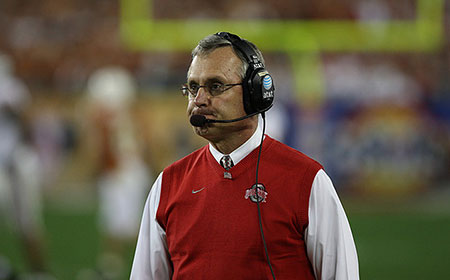
      Jim “The Sweater Vest” Tressel was so ensconced as head football coach at Ohio State that when asked if Tressel was going to be fired, OSU president Gordon Gee responded, “No, are you kidding? I’m just hoping the coach doesn’t dismiss me.” Clearly Tressel’s 106-22 record with OSU had brought him significant power, power enough that, when informed his players were selling memorabilia to a known drug dealer in exchange for tattoos, he sat on the knowledge for eight months in 2011. Then he lied to investigators about how long he knew the truth. A red-faced OSU tried to keep Tressel’s chastening to a five-game suspension and $250,000 fine, but ultimately bowed to public pressure and asked for his resignation.
  6. Minnesota brawls with Ohio State:

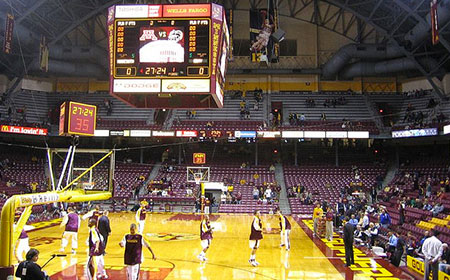
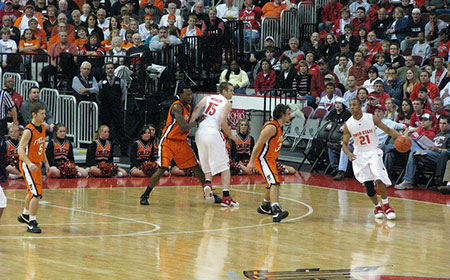
    The thought process while watching the clip of this embarrassing moment in college basketball history goes something like this: ‘OK, that was a pretty hard foul. Oh, nice, that player is going to help him up OH, NOT THE GROIN!’ Angered at an impending loss to their Big Ten rivals, Minnesota initiated a street fight by punching and kneeing Ohio State player Luke Witte and then stomping his head while he was on the floor. The crowd even booed him as he was helped off the court on his way to the hospital. The governor of Ohio called it a “public mugging.” Two Minnesota players were suspended for the season, and dunking before games — showboating that the NCAA believed attributed to the hostile environment — was banned.
  7. Miami brawls with FIU:

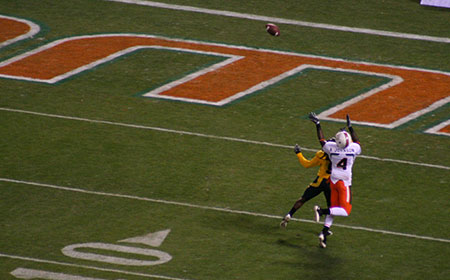
    To call this Miami football’s all-time low is saying a lot, considering their history. But on the night of Oct. 14, 2006, the country watched in disgust as Hurricane players goaded Florida International’s Golden Panthers into a fight with taunting and showing off. FIU took the bait. A Golden Panther tackled a holder and punched him, and all hell broke loose. Miami players took their helmets off and used them as weapons. An injured FIU player swung a crutch at some Hurricanes. A ‘Cane body-slammed a Panther. Players were stomped and kicked in the head. State troopers had to help separate the teams. More than 30 players were later suspended. Even a TV commentator, former Hurricane Lamar Thomas, was fired for the embarrassing in-game comments, “You come into our house, you should get your behind kicked.”
  8. University of Minnesota academic fraud:

    Minnesota basketball managed to go almost 30 years after the 1972 brawl before falling on their faces in front of the country all over again. On the morning of the team’s first-round game in the 1999 NCAA tournament, news broke of a former academic advisor claiming to have written 400 papers for Gopher basketball players over a period of five years, with head coach Clem Haskins’ total knowledge. Haskins later admitted paying the woman to do so and was subsequently fired and banned from coaching college basketball until 2007. Some supporters wished he would have fought harder to clear his name, but he correctly decided that would have only dragged the school’s name further through the mud than it had already traveled.
  9. Nevin Shapiro blows the whistle on Miami:

    When Nevin Shapiro was imprisoned in 2010 for participating in a nearly $1 billion Ponzi scheme, more than a few people in the college sports world must have started to worry. Such worry is warranted. Eight players on the Miami Hurricanes football team have already been suspended for accepting gifts from this persona non grata, but according to Shapiro, dozens more players are involved. He says from 2002 to 2010 he hooked up at least 72 college players with money, prostitutes, yacht and limo rides, tackle bounties (which are currently roiling the NFL), jewelry, and travel. Shapiro is peeved at his predicament and has vowed he will take Miami football down with him.
  10. Rick Pitino is blackmailed:

    Three, six, and 15. These are the numbers of Rick Pitino’s most notable achievements: three schools led to the Final Four, six NCAA Tournament regional championships, and 15 seconds of sex with extortionist Karen Cunagin Sypher. In one of Louisville basketball’s most embarrassing moments, and certainly the most embarrassing moment of Pitino’s storied career, the coach had an extremely brief sexual encounter with the wife of his equipment manager in a restaurant booth in 2003. The woman then tried to milk Pitino for $10 million. Pitino called the cops on her but in so doing opened himself up to some humiliating courtroom interrogation and accusations of rape by Sypher. Ultimately he was vindicated, but not until adding another sad chapter to the college sports history books.
Don't forget to vote in the fan polls!

To advertise with The Daily Hat Trick, or to submit a guest column, please contact the editor at eric@thedailyhattrick.info.

The Daily Hat Trick is sponsored by Sports N Stuff. For great deals on jerseys, shirts, cologne, and other guy stuff, visit http://www.sportsnstuff.biz/.

Tuesday, July 31, 2012

10 Colleges With the Most Powerful Coaches

College football is only a month away. Strike up the band. Sing the Alma Mater. Recite the fight song! Saturday gridiron action is almost back!

With 21st century America's pastime right around the corner, and in light of recent developments in college sports, I thought the following article on powerful college coaches would be fitting. This article was submitted to us by Elena Verlee of Online Colleges. The original article can be found on the news blog at http://www.onlinecolleges.net/.

10 Colleges With the Most Powerful Coaches

by

July 17, 2012


Ideally, colleges should be well-known, desirable, and popular because of the high quality of educational resources they offer students and other members of the community. Yet, here in the U.S. that’s not always the case. Many schools’ academic programs are eclipsed by the overwhelming popularity of their sports teams, and for better or worse that has made the coaches and head administrators of these teams incredibly powerful figures that dominate what has now become a billion-dollar industry for colleges and universities.
Often, these college coaches command multi-million dollar salaries that outpace those of any other figures at the school (and the budgets of some entire departments) and may even hold quite a bit of influence over the college president and the direction of the school itself. While some coaches have done a lot to help schools, their athletes, and their image through their influence, others have abused their power and made some pretty poor and sometimes downright appalling decisions. The coaches that follow have been some of the most powerful in recent sports history and are well known for their winning streaks, high profiles, and in some cases, distressingly unprofessional misdeeds.
  1. Penn State, Joe Paterno:


    Paterno was head coach of the Nittany Lions for almost 46 years and holds the record for the most victories by an NCAA Division I coach. He coached five undefeated teams, won major and memorable games, and was inducted into the College Football Hall of Fame in 2007. In short, he was one of the winningest and most powerful figures in college football, yet that power had a dark side, as was revealed in 2011. Paterno was fired from Penn State when it was revealed that he not only had knowledge that assistant coach Jerry Sandusky was abusing young men but actively dissuaded other university officials from reporting him to the authorities. Celebrity, high salary, success, a long tenure, and the support of team boosters and college donors gave Paterno power at the university that he shouldn’t have had, influencing the decisions of the board and the president, making him almost impossible to fire, and ultimately causing harm to dozens of young men that could have easily been prevented. Paterno is perhaps one of the clearest and most saddening examples of a college coach who had too much power for far too long.
  2. University of Alabama, Nick Saban:


    Those who are outraged by how much university administrators make only need to look at astronomically high coaching salaries to put things into perspective. Nick Saban currently holds the record for the highest salary ever paid to a college coach: $32 million over eight years, with use of a university airplane, two cars, and a country club membership to boot. It’s a testament to his power and status at the university that he was able to command this amount, and in 2008 Forbes called him the “Most Powerful Coach in Sports.” More than his salary, however, gained him this distinction. Saban was given complete control over the football program, including recruiting, coaching, business administration, and even marketing. So far, the investment seems to be paying dividends to the university, with a profit of $32 million in his first year of coaching alone and bringing in even more through donations from alumni and school supporters.
  3. Ohio State, Jim Tressel:


    Think college coaches aren’t really all that powerful? Jim Tressel admitted in 2010 that he had knowledge of his players taking money and tattoos from a drug dealer, concealed this information and did not report it to authorities, let these players start in games, and after all that was defended by the university president for these actions. In fact, Ohio State president Gordon Gee stated that, “I’m just hopeful the coach doesn’t dismiss me.” Gee may have been joking, but there is some distressing truth in his statement about the skewed balance of power in college sports today. Despite his improper actions, Tressel still had the support of the school and the community, with fans showing up at a pep rally to support him. While he was ultimately allowed to resign (a controversial decision in itself), his reputation doesn’t seem to be as tarnished as it should have for his actions, and he now works at the University of Akron as a vice president.
  4. Indiana University, Bobby Knight:


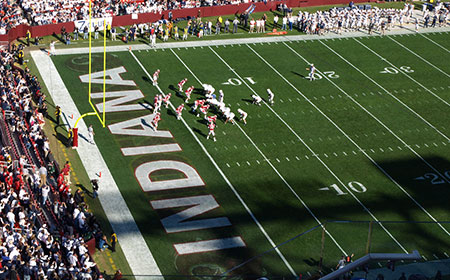
    Bobby Knight has worked for a number of college teams in his coaching career, each time helping the teams to turn around and become winners, most famously at Indiana where he led the Hoosiers to numerous championships, won several Coach of the Year honors, and was even asked to coach the U.S. Olympic team. Yet Knight is as famous for his fits of temper as his high win count. During his tenure at Indiana he spewed profanities during an NCAA tournament news conference; kicked his son, an IU assistant, and responded with a four-letter obscenity to Indiana fans behind him who booed; refused to let his team finish an exhibition game against a Soviet team; and even purportedly choked one of his players. During all of this bad behavior, Knight was never under any threat of being fired by university president John Ryan who said he couldn’t fire Knight because of the alumni. In fact, it wasn’t until Ryan was replaced as president that Knight was ousted, with Myles Brand making a name for himself at the university for those actions. However necessary, Brand would face outrage, protests, and even threats for his actions, which in retrospect were long overdue and well within his power.
  5. Florida State, Bobby Bowden:


    Bobby Bowden is one of the most decorated coaches in college sports history, winning an impressive 389 games (though some of those wins were vacated after it was revealed that ineligible players were on the field). Bowden may have an impressive record, but he’s another coach who held perhaps a little too much sway at his college. In 2008 the head of the Board of Trustees asked Bowden to step down in light of recent losses and Bowden’s advanced age (at the time, he was turning 80). Bowden responded that he would let them know if he wanted to come back or not, publicly demonstrating for all to see who was really in control of the situation. Even the governor of Florida announced that he supported Bowden if he chose to return to coach and that he considered him one of the greatest coaches of all time, wishing him luck for the season. Bowden would eventually retire on his own terms, but his power over the university and the community makes him stand out as one of the most influential coaches to ever work in college sports.
  6. University of Louisville, Rick Pitino:


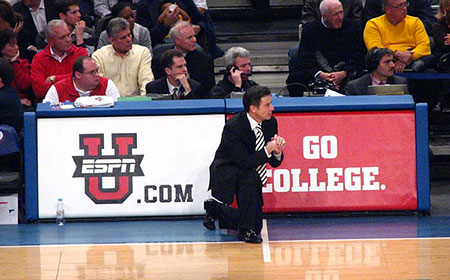
    The only coach to ever lead three separate teams to the Final Four, Rick Pitino was a college sports heavy hitter, a fact that was also evidenced by his incredible $7,531,378 a year salary. Yet his position at the school, perhaps cemented by this winning history, was so solid that even a major scandal couldn’t shake it. Despite his contract stating that Pitino could be fired for “acts of moral depravity or misconduct that damage the university’s reputation,” he held onto his job after it was discovered that he had sexual relations with a woman in a Louisville restaurant then paid her to have an abortion and keep quiet about the tryst. Those actions may have done damage to the university’s reputation, but university president James Ramsey decided that the damage would be worse if the school lost Pitino, allowing him to stay on as coach. After this year’s winning season and healthy prospects for next year, Ramsey probably feels pretty justified in that decision, though he’s made it quite clear where the university’s priorities lie.
  7. University of Florida, Urban Meyer:


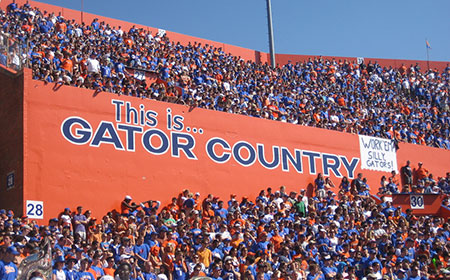
    Urban Meyer is in the top echelon of college coaches when it comes to salary, pulling in a contract with the University of Florida that promised him a whopping $24 million over six years. He has since moved on to Ohio State, where he commands $4 million a year, bonuses, and the use of a private jet. Unlike many others on this list, Meyer has generally held himself above many of the problems that have affected other powerful college teams, a big part of what helps him command such a high salary. Yet when he resigned from Florida in 2009, some pointed to serious problems with the team, including drug use, preferential treatment, entitlement, and scholarship manipulation. Meyer has denied these allegations, but with misbehavior and rule violations so prevalent in college sports and kept so deeply under wraps by embarrassed schools, it may never be known what truly happened.
  8. Duke University, Mike Krzyzewski:


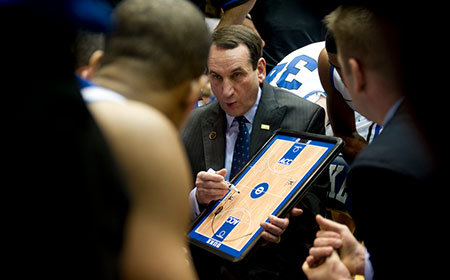
    Sometimes just called Coach K, this Duke coach has led his team to four NCAA championships, 11 Final Fours, 12 ACC titles, and 13 ACC championships. He’s also the coach of the men’s national basketball team, winning gold at the 2008 summer Olympics and hoping to lead this year’s team to a repeat victory. For his expertise, he’s paid pretty well, pulling in a whopping $4,195,519 during the 2010-2011 season. What’s more, he seems to have thus far avoided many of the scandals that have plagued other high-profile coaches, instead being better known for helping ensure almost all of his players graduate. He did raise eyebrows with recent comments in defense of Paterno, stating that the iconic coach’s record of winning shouldn’t be wiped clean because of recent revelations of misconduct. Many have found this distressing, as it reflects and increasingly common attitude that gives winning games more importance than doing the right thing.
  9. University of Connecticut, Geno Auriemma:


    So far, all the coaches on this list have been for men’s sports, but there are some women’s sports coaches who stand out for their power on college campuses as well. Geno Auriemma is one of those coaches. He has led the Huskies to seven NCAA Division I championships, won six Naismith College Coach of the Year awards, and is the head coach of the U.S. women’s national team in this year’s Olympic games. He has long enjoyed a rivalry with Pat Summitt of the University of Tennessee, with each vying to coach the best women’s basketball teams. While Auriemma has largely enjoyed a spotless record at UConn, a recent lawsuit may tarnish that, as an NBA official for the Olympics claims Auriemma harassed her and then had her fired. The allegations may be proven to be false, but for now many are hoping that the legal trouble doesn’t distract Auriemma from coaching the women’s team to victory.
  10. University of Tennessee, Pat Summitt:


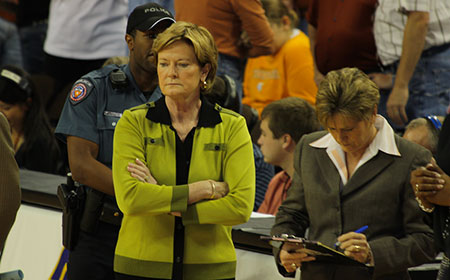
    As unfair as it may be, women’s sports often don’t get as much attention on college campuses, nor do their coaches. Yet Pat Summitt made a name for herself during her tenure at the University of Tennessee coaching the Lady Volunteers basketball team. She is the all-time winningest coach in NCAA history in either men’s or women’s basketball, for all divisions. During her time at Tennessee, Summitt led her team to eight national championships, earning 1,098 victories during her 38 years as coach, and never once having a losing season. In both 1997 and 2000, Tennessee asked Summitt to coach the men’s team, an unprecedented move, but Summitt declined the offer, opting to stick with the women’s team. She was so well-regarded as a coach that she was awarded the Presidential Medal of Freedom in 2012 by Barack Obama. That’s a kind of power and prominence that no other coach on this list can match.
Don't forget to vote in the fan polls!


To advertise with The Daily Hat Trick, or to submit a guest column, please contact the editor at eric@thedailyhattrick.info
The Daily Hat Trick is sponsored by Sports N Stuff. For great deals on jerseys, shirts, cologne, and other guy stuff, visit http://www.sportsnstuff.biz/.

Wednesday, November 9, 2011

With Great Power Comes Great Responsibility

Just because it's a comic book doesn't mean it is without societal value. 1
This line, from the “Spiderman” movies, may be the most profound quote from a comic book based movie in the history American cinema. The line comes into my mind often in different situations from time to time. The latest sex scandal, involving alleged child molestation by former Penn State University assistant head coach Jerry Sandusky, is yet another example, and a painful example. The reason that the Spiderman line resonates with so many people is simple: power corrupts.


FEAR

I do not question the fundamental decency of Penn State wide receivers coach Mike McQueary, then a 28 year old graduate assistant. I question the corruption of the power of the Penn State football program. Very few people have an opportunity to be associated with a first rate college football program. Graduate assistants are near the bottom of the totem pole and are happy to be there. Failure at the graduate assistant level could preclude any opportunities in big time college football in the future.

McQueary allegedly spotted Sandusky in the shower with a 10 year old boy, participating in Sandusky’s youth program, at a Penn State facility. Several other alleged victims have since come forward since these allegations came to light. According to reports from multiple media outlets, McQueary called his father upon discovery of the alleged conduct.

His father advised McQueary to leave immediately. McQueary reported what he saw to legendary Penn State Head Football Coach Joe Paterno, who is in his 46th year as head coach and his 62nd year of total coaching tenure at the university. Paterno reported the account to the athletic director.

That’s it. Nobody jumped into the shower and said, “What the hell is going on here?” Nobody jumped in and said “stop”. All that happened was that Sandusky was prohibited from conducting youth programs on the Penn State campus. My initial reaction was “How could this happen?”

Power corrupts. I highly doubt that McQueary, were he a stock clerk in a grocery store, supplementing (what was likely) a meager grad assistant income, would call his father if he saw the store manager engaging in inappropriate behavior with a child in the bathroom in the warehouse section of the store. I have little doubt that he (or any decent person) would step in, break up the incident, and then sell the manager up the river to upper management and, ultimately, law enforcement. It’s a grocery store. There won’t be much, if any, media coverage. There aren’t any big time careers at risk.

However, power corrupts. McQueary had very little power while getting a once-in-a-lifetime opportunity to get his foot in the door in major college football. Had he brought negative publicity to the program, he could have been exiled from coaching. McQueary succumbed to power and protected his career before protecting a child. Power corrupts.

McQueary 2
IMAGE

I do not question the fundamental decency of Joe Paterno. I question the corruption of the power of the Penn State football program. Joe Paterno has been tied to the Penn State football program since 1950, head coach since 1966. “Joe Paterno” is almost synonymous with “Penn State”. His aura is ubiquitous in State College, Pennsylvania.

Power corrupts. I highly doubt that Paterno, had he seen what McQueary saw at a local gym, would have informed the manager and gone home. In fact, I think Paterno would have intervened himself, certainly with his words and possibly by physically confronting such an assailant. In the hypothetical scenario, Paterno would likely have acted and been lauded by the community as a hero. What’s the worst that could happen? His gym membership is revoked? Not likely; he’d probably get a free membership (if he didn’t already have one).

However, power corrupts. Paterno is a legend in college football and I cannot imagine him being treated as anything other than a living god in State College. An allegation of child sexual abuse could tarnish his image, his legacy, his football program, and his university. Paterno didn’t ban Sandusky from the facility (where Sandusky was reported to be working out last week). There is no report that Paterno found out who the child or his parents were. Paterno punted to the athletic director, fulfilling his legal obligation, but no more. Power corrupts.

Paterno at his home last night 3
DEPRAVITY AND ARROGANCE

I do not question the fundamental sanity of Jerry Sandusky. I question the corruption of the power of the Penn State football program. Sandusky was a long time assistant at Penn State, a one-time heir apparent to the legendary Paterno. Generations upon generations of Penn State football players transitioned from adolescents to young men under Sandusky’s tutelage, with many developing into professional football players. Sandusky had tremendous clout at Penn State.

Power corrupts. I highly doubt that Sandusky, had he been at a Christmas party at the home of an acquaintance, would have the gall to behave inappropriately with a child in that environment. He would have never had the level of comfort, in someone else’s house, needed to pull of such a heinous act. He may have been shot dead on the spot, without hesitation, had he been discovered under those circumstances.

However, power corrupts. Sandusky found a safe haven within the bowels of the Penn State football facilities. Sandusky was “the man”, answering to very few at the school whose football program he helped build into and maintain as a national powerhouse. Sandusky thought he could do anything he wanted to, no matter how immoral, at his safe haven. Allegedly, he did what he wanted and it was at the peak of immorality. Power corrupts.

Sandusky 4
To advertise with The Daily Hat Trick, or to submit a guest column, please contact the editor at eric@thedailyhattrick.info.

The Daily Hat Trick is sponsored by Sports N Stuff. For great deals on jerseys, shirts, cologne, and other guy stuff, visit http://www.sportsnstuff.biz/.

1) Image from http://ten24ten.blogspot.com
2) Image from http://www.usatoday.com/
3) Image from http://www.pennlive.com/
4) Image from http://www.lockhaven.com/