Search This Blog

Showing posts with label coaches. Show all posts

Wednesday, August 6, 2014

Behind Every Good Man

On Tuesday, NBA Champion San Antonio Spurs Head Coach Gregg Popovich hired former WNBA star Becky Hammon as an assistant coach. The hiring makes Hammon the first woman to be a full time, paid assistant coach in the history of the NBA. Once again, the NBA is ahead of the curve of social progress.

WHAT’S THE BIG DEAL?

Beyond the fact that Hammon’s gender makes her hiring historic, I think this story is going to fade quickly. It will come and go whenever a member of the media wants something to write about or talk about, likely with more going than coming. Someone at some point will do or say something insensitive related to Hammon’s gender. It, too, shall pass.

I don’t know anything about Hammon’s knowledge of X’s and O’s. We are all acutely aware of the legacy and elite level of achievement of Popovich’s NBA head coaching career. Pop is five time NBA Champion as coach of the Spurs. He is the most accomplished active NBA head coach.  He is going to coast in to the Basketball Hall of Fame when he decides to retire and is eligible. In short, Coach Popovich’s selection of Hammon is all I need to know about her qualifications.

Considering the man who made the hire, I have little doubt about Hammon's coaching potential. 1

THE BIG DEAL IS….

What none of us can truly know until we see the curtain rise on the 2014-2015 NBA season is what differences, if any, will there be in the dynamic of a woman coaching men. As human beings, we approach the opposite differently, even if slightly, in different situations. How will it translate in the hyper-competitive NBA on a team seeking its third consecutive Western Conference title and back-to-back NBA Championships?

Also, whether Hammon is successful or not (see her boss for why I think she will be), she will not be the last woman to coach in the NBA. She will not be a one-off. The WBNA has a plethora of knowledgeable players with high basketball IQ’s. The NBA is always looking for talent. It is inevitable that the men’s league will pick people with coaching potential from the women’s league, just like it does from the Developmental League and did with the now defunct Continental Basketball Association.

The question is: as more women enter the NBA coaching ranks and succeed, how long will it be before there is a woman hired as the Head Coach of an NBA team. It may not happen this year or even this decade, but Hammon has broken the glass ceiling of coaching. It’s only a matter of time before a woman is hired for the top job.

How long will it be before that happens and how long before a woman is the leader of men? What kind of personality in a woman will it take to manage and coach and lead and discipline 15 elite, millionaire, alpha-male jocks? Being an assistant coach is at a completely different level of demand than being the guy (or the girl).

Hammon in the WNBA. 3
HIS AND HER LOCKER ROOMS?

Another question I have seen floated since Tuesday’s announcement is: will there ever be a woman to play in the NBA. Hammon gave the answer that every knowledgeable sports enthusiast already knew: “No.”

This isn’t the playground, it is major league sports. Sure, a high school girls hoops team could smoke a bunch of dudes without the technical knowledge or benefit of coaching that the girls team possesses. However, on the whole, men are bigger, stronger, and faster than women. The same applies when skimming the tiny, elite percentage of people occupying the 450 active roster spots in the NBA.

People who have played and closely followed sports know this truth. Casual fans or non-fans simply intrigued by the historic nature of Hammon’s hiring may not grasp or even buy into this concept. Consider that dunks are a routine occurrence, often a dozen times per night, in an NBA game and the vast majority of NBA players can go above the rim with ease. In the 18 year history of the WNBA, there have only been 20 dunks recorded by five players*.

This is the only competitive dunking involving a woman most of us will ever see live with our own eyes. 2
SO WHAT’S THE BIG DEAL?


Hammon’s hiring is because of what she has upstairs, developed by years of what her body could do while competing against similarly talented peers. She need not be able to posterize Tony Parker to be effective from the sideline. Talk about it today. It will be yesterday’s news before tomorrow.

Don't forget to vote in the fan polls!

To advertise with The Daily Hat Trick, or to submit a guest column, please contact the editor at eric@thedailyhattrick.info.

*Source: wikipedia.org
2) Image from www.wikipedia.org
3) Image from www.espn.com

Monday, February 25, 2013

That Guy

Chances are that if you took the time to log on to a sports blog, you have your fair share of sports discussions. Perhaps you listen to sports talk radio. If you like sports, watch sports, talk about sports and listen to others discuss sports, chances are you have heard several inevitable clichés that come up during sports discussions.

We've discussed different sports discussion guys in the past. Today, we are going to discuss the different kind of sports cliché guys who arise during sports discussions. Typically, this is a guy who thinks he knows more than he does. Whether it is at the water cooler, the local watering hole, or on the radio, you can count on eventually hearing some of the following guys spouting these clichés.

I could tell you half of the things that one of them will say without being able to hear them. 2
“THE COACH IS TOO NICE” GUY

This guy cracks me up. This is the sports fan who thinks that by the head coach yelling and screaming, foaming at the mouth, and cracking the whip, the team will magically and miraculously improve, win more games, and/or score more points in the second half of a game in which the team is trailing.

This is all but certainly someone who never played organized sports at the high school level or above. The solution to his team’s woes aren’t rooted in training, preparation, scheme, personnel, injuries, matchups, or offsetting external factors like travel fatigue or home field advantage. Nope. The coach just needs to knock over the water cooler, put his foot through the chalkboard, curse like a sailor, and THEN his team will get the message and respond.

All coaches at the major college or professional level got as far as they got because of their general personality. They aren’t changing. They may adjust their approach to their players, do a little more of this and a little less of that, but the general coaching philosophy isn’t changing. The yellers and screamers, former NFL coach Mike Ditka, University of Alabama football coach Nick Saban, and University of South Carolina Men’s Basketball Head Coach Frank Martin come to mind, are wired to yell and scream. They will yell and scream when they are up 21 points near the end of the game but a player ignored a command. It is who they are.

Much like the yellers and screamers aren’t changing, neither are the “laid back” guys who do not blow their stacks. Losing one’s cool is simply not in the DNA of the cool, calm, and collected coach. It cannot and will not work for them. Their players know their assignments and know the consequences for failure equally well and the screamer’s players. While the Type A coach may be more entertaining for us to observe during his antics, it doesn’t make him more effective. For examples, see Tony Dungy, Dick Vermeil, Mike Tomlin, Les Miles, and Mike Krzyzewski.

I'm at my best at work with some asshole bellowing in my ear, too. 1
“IF I DID THAT AT MY JOB” GUY

Athletes are known for their off the field activities as well as their on-field actions. While there are countless anonymous acts of community service and charity by athletes, the acts of a handful of miscreants such as arrests and anti-social behavior in the locker room tend to produce the most sensational and attention grabbing headlines.

Inevitably, someone will bring up in the conversation a point to the effect of, “If I did that at my job, I would get fired,” or “If I spoke to my boss like that, I’d get demoted.” This completely cliché and unoriginal insight also has the disadvantage to the speaker of being completely irrelevant. Assuming we are discussing professional athletes, this just in, the “if I did that at my job” guy can be replaced in a week or two, perhaps a day or two if that guy is a laborer.

Those talented enough to be pro athletes make up a very tiny percentage of the population. They don’t grow on trees. Most starters are not immediately replaceable and most replacements for reserve/backup players are a step down from the incumbent. In games that are decided by inches with intense public pressure to win, unnecessary personnel turnover is costly and undesirable.

So remember, your services at Jiffy Lube can be replaced by anyone with a pulse. Your crap is not worth the trouble of tolerating. A wide receiver who runs a 4.3 forty is hard to find and most coaches will tolerate just about anything but hard time if the productivity at “the office” is good enough.

If they toss this guy out of the door, it won't cost them a second round draft pick. 3
“I WOULD DO WHATEVER THEY ASKED ME IF THEY PAID ME THAT MUCH” GUY

This guy is in a similar vein as “If I Did That at My Job,” guy. This is the guy who believes that, because athletes are paid much more money in a season than he might see in ten years, athletes shouldn’t speak or think and just function as zombies or robots on command.

Mind you, this is probably the same guy who complains about something in the break room or his lack of a parking space with regularity. This is the guy who probably mumbles under his breath when he’s asked to lift an extra bag of soil at the Wal-Mart at which he works. But, suddenly this guy would clean the bathroom for the customers with a smile if there were a few more zeroes in his paycheck?

You wouldn't do whatever if they paid you that much, because you CAN'T DO ANYTHING that someone would pay you that much to do. Kobe Bryant could tell his (former) coach, Mike Brown, to kiss his ass because he is Kobe freaking Bryant, future Hall of Famer. They pay him that much because he’s worth that much. And in the end, Bryant effectively fired Brown, not the other way around, and rattled off an “Amnesty THAT” blast at another league owner. I don't think Kobe is worried about being in trouble for smarting off to the boss man for another team in the league. 

Contrary to what "that guy" might think, with the work ethic it takes to become a star athlete, I think Dwight Howard would make a better shoe salesman than 'that guy" would make an NBA Center. 4

Don't forget to vote in the fan polls!

To advertise with The Daily Hat Trick, or to submit a guest column, please contact the editor at eric@thedailyhattrick.info.

The Daily Hat Trick is sponsored by Sports N Stuff. For great deals on jerseys, shirts, cologne, and other guy stuff, visit http://www.sportsnstuff.biz/.

1) Image from www.bradlaughs.com
2, 3) Images from www.visualphotos.com
4) Image from http://unlocked.footlocker.com

Wednesday, October 10, 2012

10 Reasons Dad May Not Want to Coach a Youth Baseball Team

Another academic year is upon us and with it comes the joy of youth sports in schools and communities across the country. I personally volunteer on the football coaching staff at a high school here in Baton Rouge. Having observed the impact that adults can have on young athletes, I thought I would share a guest article about coaching kids, shared with me by Barbara Williams of Find a Babysitter.

This piece is a tad out of season, focused on coaching baseball as opposed to football or basketball, but the same principles apply. If you are a parent, consider the following before you step up to coach your child's youth sports team. The original article can be found on the blog at http://www.findababysitter.org.

It’s a simple dream that many dads across the country have: to coach their child’s little league team. But is it the right idea for you?

Before you take on the responsibilities that come with being a team coach, it’s best to reflect on what is best for you and your child. It might be coaching, but if it’s not, you might fall into the following categories.
  1. Being Careful with Favoritism – Showing your kid too much love and attention over the other kids on the team could cause some friction. While it would be easy to focus all of your energy on your own child, you want to also consider the feelings of the other children on the team.
  2. Too much pressure put on the kid – Being both dad and a coach could apply some unwanted pressure on your child. Your expectations as the hybrid dad-coach for your own child might be higher than what is expected from other team members. Unwanted pressure from a parent could cause strain in the relationship.
  3. Too much pressure on the dad – The pressure to win and get the kids to have fun might be a little too much for some dads. There is also team planning, practices and games they have to prepare for, and some dads might not have that time outside of their jobs.
  4. Dad might not be a good coach – Dad might be stepping into a world that he has little to no knowledge of. His understanding of the sport might not be up to the level of other dads and coaches, so it might be wise to pass the torch to someone else. It’s alright to be one of the team assistants on the first go-round.
  5. Might be too harsh on your own kid – If your kid makes a mistake in the game or during practice, there is a chance you might come down a little too hard on your kid. Expectations might be higher for your own kid, and as a coach, you would have to fight the discipline urges.
  6. Jealousy – The flip side of being too harsh on your own kid is giving the kid more attention and praise than other members of the team. It can lead to jealousy among the team when it came to playing time.
  7. Might cause friction with other team parents – Team parents for a youth squad get a unique bonding opportunity. They get to watch kids grow and play together, but if you are the dad and coach, it could cause problems with fellow parents. Some parents may believe they have a better idea of how the team should be run, and that could lead to friction.
  8. Siblings might be jealous that dad coaches their team – If you are the dad of multiple children, be careful of a little sibling rivalry. Younger children might not fully grasp why you are coaching the team and not focusing your attention with them. If you do decide to coach, it might be best to put in some coaching time with the other kids to balance everything out.
  9. Dad might be a bad sport – There is a chance that the dad could just be a bad sport somewhere deep down. Competitive juices could rise up and lead to friction among the team and other team parents. If there is a tendency that dad is a bad sport, maybe it is best that he not coach the team.
  10. Miss out on watching own child play – One of the great joys of being a parent of a sporting child is watching that child play and grow within the game. As a coach, you might struggle with staying objective and keeping your emotions in check. Watching from the stands will give fathers the chance to enjoy their child’s play and not worry about the pressures of coaching.
Don't forget to vote in the fan polls!

To advertise with The Daily Hat Trick, or to submit a guest column, please contact the editor at eric@thedailyhattrick.info.

The Daily Hat Trick is sponsored by Sports N Stuff. For great deals on jerseys, shirts, cologne, and other guy stuff, visit http://www.sportsnstuff.biz/.

Tuesday, July 31, 2012

10 Colleges With the Most Powerful Coaches

College football is only a month away. Strike up the band. Sing the Alma Mater. Recite the fight song! Saturday gridiron action is almost back!

With 21st century America's pastime right around the corner, and in light of recent developments in college sports, I thought the following article on powerful college coaches would be fitting. This article was submitted to us by Elena Verlee of Online Colleges. The original article can be found on the news blog at http://www.onlinecolleges.net/.

10 Colleges With the Most Powerful Coaches

by

July 17, 2012


Ideally, colleges should be well-known, desirable, and popular because of the high quality of educational resources they offer students and other members of the community. Yet, here in the U.S. that’s not always the case. Many schools’ academic programs are eclipsed by the overwhelming popularity of their sports teams, and for better or worse that has made the coaches and head administrators of these teams incredibly powerful figures that dominate what has now become a billion-dollar industry for colleges and universities.
Often, these college coaches command multi-million dollar salaries that outpace those of any other figures at the school (and the budgets of some entire departments) and may even hold quite a bit of influence over the college president and the direction of the school itself. While some coaches have done a lot to help schools, their athletes, and their image through their influence, others have abused their power and made some pretty poor and sometimes downright appalling decisions. The coaches that follow have been some of the most powerful in recent sports history and are well known for their winning streaks, high profiles, and in some cases, distressingly unprofessional misdeeds.
  1. Penn State, Joe Paterno:


    Paterno was head coach of the Nittany Lions for almost 46 years and holds the record for the most victories by an NCAA Division I coach. He coached five undefeated teams, won major and memorable games, and was inducted into the College Football Hall of Fame in 2007. In short, he was one of the winningest and most powerful figures in college football, yet that power had a dark side, as was revealed in 2011. Paterno was fired from Penn State when it was revealed that he not only had knowledge that assistant coach Jerry Sandusky was abusing young men but actively dissuaded other university officials from reporting him to the authorities. Celebrity, high salary, success, a long tenure, and the support of team boosters and college donors gave Paterno power at the university that he shouldn’t have had, influencing the decisions of the board and the president, making him almost impossible to fire, and ultimately causing harm to dozens of young men that could have easily been prevented. Paterno is perhaps one of the clearest and most saddening examples of a college coach who had too much power for far too long.
  2. University of Alabama, Nick Saban:


    Those who are outraged by how much university administrators make only need to look at astronomically high coaching salaries to put things into perspective. Nick Saban currently holds the record for the highest salary ever paid to a college coach: $32 million over eight years, with use of a university airplane, two cars, and a country club membership to boot. It’s a testament to his power and status at the university that he was able to command this amount, and in 2008 Forbes called him the “Most Powerful Coach in Sports.” More than his salary, however, gained him this distinction. Saban was given complete control over the football program, including recruiting, coaching, business administration, and even marketing. So far, the investment seems to be paying dividends to the university, with a profit of $32 million in his first year of coaching alone and bringing in even more through donations from alumni and school supporters.
  3. Ohio State, Jim Tressel:


    Think college coaches aren’t really all that powerful? Jim Tressel admitted in 2010 that he had knowledge of his players taking money and tattoos from a drug dealer, concealed this information and did not report it to authorities, let these players start in games, and after all that was defended by the university president for these actions. In fact, Ohio State president Gordon Gee stated that, “I’m just hopeful the coach doesn’t dismiss me.” Gee may have been joking, but there is some distressing truth in his statement about the skewed balance of power in college sports today. Despite his improper actions, Tressel still had the support of the school and the community, with fans showing up at a pep rally to support him. While he was ultimately allowed to resign (a controversial decision in itself), his reputation doesn’t seem to be as tarnished as it should have for his actions, and he now works at the University of Akron as a vice president.
  4. Indiana University, Bobby Knight:


    Bobby Knight has worked for a number of college teams in his coaching career, each time helping the teams to turn around and become winners, most famously at Indiana where he led the Hoosiers to numerous championships, won several Coach of the Year honors, and was even asked to coach the U.S. Olympic team. Yet Knight is as famous for his fits of temper as his high win count. During his tenure at Indiana he spewed profanities during an NCAA tournament news conference; kicked his son, an IU assistant, and responded with a four-letter obscenity to Indiana fans behind him who booed; refused to let his team finish an exhibition game against a Soviet team; and even purportedly choked one of his players. During all of this bad behavior, Knight was never under any threat of being fired by university president John Ryan who said he couldn’t fire Knight because of the alumni. In fact, it wasn’t until Ryan was replaced as president that Knight was ousted, with Myles Brand making a name for himself at the university for those actions. However necessary, Brand would face outrage, protests, and even threats for his actions, which in retrospect were long overdue and well within his power.
  5. Florida State, Bobby Bowden:


    Bobby Bowden is one of the most decorated coaches in college sports history, winning an impressive 389 games (though some of those wins were vacated after it was revealed that ineligible players were on the field). Bowden may have an impressive record, but he’s another coach who held perhaps a little too much sway at his college. In 2008 the head of the Board of Trustees asked Bowden to step down in light of recent losses and Bowden’s advanced age (at the time, he was turning 80). Bowden responded that he would let them know if he wanted to come back or not, publicly demonstrating for all to see who was really in control of the situation. Even the governor of Florida announced that he supported Bowden if he chose to return to coach and that he considered him one of the greatest coaches of all time, wishing him luck for the season. Bowden would eventually retire on his own terms, but his power over the university and the community makes him stand out as one of the most influential coaches to ever work in college sports.
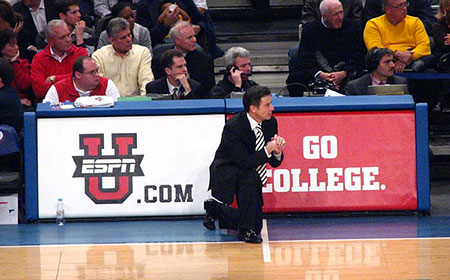
  6. University of Louisville, Rick Pitino:


    The only coach to ever lead three separate teams to the Final Four, Rick Pitino was a college sports heavy hitter, a fact that was also evidenced by his incredible $7,531,378 a year salary. Yet his position at the school, perhaps cemented by this winning history, was so solid that even a major scandal couldn’t shake it. Despite his contract stating that Pitino could be fired for “acts of moral depravity or misconduct that damage the university’s reputation,” he held onto his job after it was discovered that he had sexual relations with a woman in a Louisville restaurant then paid her to have an abortion and keep quiet about the tryst. Those actions may have done damage to the university’s reputation, but university president James Ramsey decided that the damage would be worse if the school lost Pitino, allowing him to stay on as coach. After this year’s winning season and healthy prospects for next year, Ramsey probably feels pretty justified in that decision, though he’s made it quite clear where the university’s priorities lie.
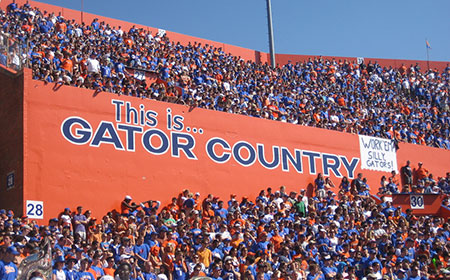
  7. University of Florida, Urban Meyer:


    Urban Meyer is in the top echelon of college coaches when it comes to salary, pulling in a contract with the University of Florida that promised him a whopping $24 million over six years. He has since moved on to Ohio State, where he commands $4 million a year, bonuses, and the use of a private jet. Unlike many others on this list, Meyer has generally held himself above many of the problems that have affected other powerful college teams, a big part of what helps him command such a high salary. Yet when he resigned from Florida in 2009, some pointed to serious problems with the team, including drug use, preferential treatment, entitlement, and scholarship manipulation. Meyer has denied these allegations, but with misbehavior and rule violations so prevalent in college sports and kept so deeply under wraps by embarrassed schools, it may never be known what truly happened.
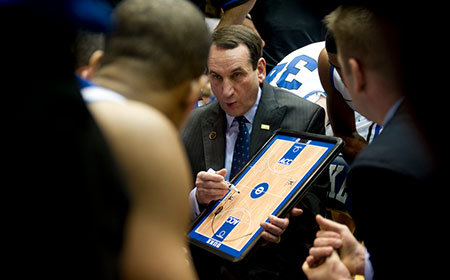
  8. Duke University, Mike Krzyzewski:


    Sometimes just called Coach K, this Duke coach has led his team to four NCAA championships, 11 Final Fours, 12 ACC titles, and 13 ACC championships. He’s also the coach of the men’s national basketball team, winning gold at the 2008 summer Olympics and hoping to lead this year’s team to a repeat victory. For his expertise, he’s paid pretty well, pulling in a whopping $4,195,519 during the 2010-2011 season. What’s more, he seems to have thus far avoided many of the scandals that have plagued other high-profile coaches, instead being better known for helping ensure almost all of his players graduate. He did raise eyebrows with recent comments in defense of Paterno, stating that the iconic coach’s record of winning shouldn’t be wiped clean because of recent revelations of misconduct. Many have found this distressing, as it reflects and increasingly common attitude that gives winning games more importance than doing the right thing.
  9. University of Connecticut, Geno Auriemma:


    So far, all the coaches on this list have been for men’s sports, but there are some women’s sports coaches who stand out for their power on college campuses as well. Geno Auriemma is one of those coaches. He has led the Huskies to seven NCAA Division I championships, won six Naismith College Coach of the Year awards, and is the head coach of the U.S. women’s national team in this year’s Olympic games. He has long enjoyed a rivalry with Pat Summitt of the University of Tennessee, with each vying to coach the best women’s basketball teams. While Auriemma has largely enjoyed a spotless record at UConn, a recent lawsuit may tarnish that, as an NBA official for the Olympics claims Auriemma harassed her and then had her fired. The allegations may be proven to be false, but for now many are hoping that the legal trouble doesn’t distract Auriemma from coaching the women’s team to victory.
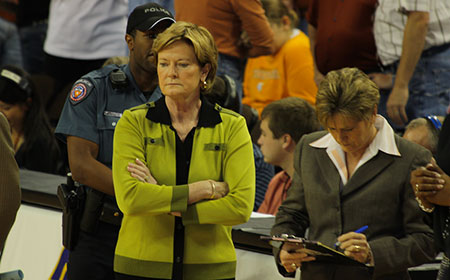
  10. University of Tennessee, Pat Summitt:


    As unfair as it may be, women’s sports often don’t get as much attention on college campuses, nor do their coaches. Yet Pat Summitt made a name for herself during her tenure at the University of Tennessee coaching the Lady Volunteers basketball team. She is the all-time winningest coach in NCAA history in either men’s or women’s basketball, for all divisions. During her time at Tennessee, Summitt led her team to eight national championships, earning 1,098 victories during her 38 years as coach, and never once having a losing season. In both 1997 and 2000, Tennessee asked Summitt to coach the men’s team, an unprecedented move, but Summitt declined the offer, opting to stick with the women’s team. She was so well-regarded as a coach that she was awarded the Presidential Medal of Freedom in 2012 by Barack Obama. That’s a kind of power and prominence that no other coach on this list can match.
Don't forget to vote in the fan polls!


To advertise with The Daily Hat Trick, or to submit a guest column, please contact the editor at eric@thedailyhattrick.info. 
The Daily Hat Trick is sponsored by Sports N Stuff. For great deals on jerseys, shirts, cologne, and other guy stuff, visit http://www.sportsnstuff.biz/.