“G.O.A.T.”….Greatest Of All Time. What does it mean, exactly? What standard should be used in each sport to determine greatness? How much do team success like wins and championships factor into greatness? How much should one era of a sport be credited or discounted over a past or later era of a sport? Should different periods of time even be compared?
This topic reached my wheelhouse this past weekend when a group of college buddies, with whom I regularly discuss all manners of sports, began discussing the legacy of Paul Pierce, in light of Pierce surpassing Larry Bird as the Celtics second all-time leading scorer. This mushroomed, as it often does, into a discussion over the greatest player of all time and who was greater than whom.
This chain of discussions among this circle of friends has taken place for as long as we have all been regularly using email (more than 10 years). The basketball topic always starts some time shortly after the Super Bowl and will drag, sometimes (it feels like) in the same email thread, until after the NBA Finals. What never ceases to amaze me is how distinct, yet predictable, personalities emerge in these discussions.
I am not going to sell you my case for Michael Jordan being the G.O.A.T., not today. In fact, I am not even going to suggest reasons a certain standard, blending multiple measures of achievement. Today, I am going to discuss the lighter side of greatness in sports: the types of people (usually guys) you will inevitably encounter when discussing greatness.
“COUNT THE RINGS” GUY
It is impossible to have a discussion about individual greatness with five or more people without one or more pointing to a player’s skins on the wall as a talking point, if not a closing argument. If you don’t see that guy, it might be you! Count the Rings Guy can be a difficult debate opponent if you disagree with the relative accolades of the person he is promoting. After all, the ultimate goal of playing any competitive sport is to win and, ultimately, win a championship.
This guy has his strengths and weaknesses. Counting championship rings in a sports debate is like using salt or pepper: it can make a meal taste better, but you cannot eat it by itself. If the argument is properly framed, even in a team sport, it can be compelling and difficult to rebut.
Too often, however, this guy falls down the rabbit hole of prefacing and hinging his entire case upon the quantity of championships won by an individual player. If you can trap this guy into that argument, simply counter that reserve center Will Perdue of the Chicago Bulls has three championship rings. If “rings” is all this guy has, the discussion is over.
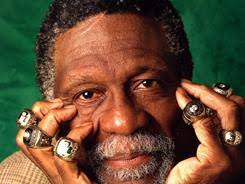 |
| Bill Russell: G.O.A.T.? 1 |
“RINGS DON’T COUNT” GUY
This is the antithesis of Ring Guy. He will, correctly, point out that team sports are about more than one individual player. What this guy fails (or refuses) to acknowledge is that great players are the anchors on championship team. Championships won are an output of a great player’s career.
This guy has a strong position when discussing the relative greatness of marginal and role players, guys who were “good” or “key” to winning a championship, but not Hall of Fame players. When discussing true all time greats, particularly those with similar skill sets, winning and losing, particularly in the postseason and especially at the end of the postseason, is one of the few differentiators available to separate one great player’s resume from that of another.
When this guy gets on a roll, ask him who he thinks the five greatest players or coaches are in whatever category you are debating. Only a contrarian could name that many people without any championships, in which case you are talking to a brick wall and should not engage this person. When they name people who won championships, simply press this person to eliminate the championship winners and replace them with non-winners. It is always harder to refute a negative (like championships not mattering) than a positive, but it will throw a speed bump in this guy’s path.
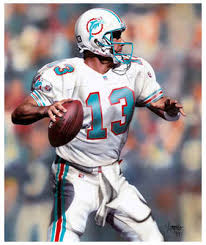 |
| Dan Marino: Zero rings, G.O.A.T.? 2 |
“HE WOULDN’T SURVIVE IN THE MODERN GAME” GUY (OR “HE WOULDN’T HAVE SURVIVED BACK THEN” GUY)
This is the guy who discounts the accomplishments of great players from the past because their physical dimensions, collectively, are smaller, weaker, and slower than their present-day counterparts. This is a person who will frequently use the words “would, could, and should”. This guy sometimes takes the opposite point of view because, for example, sports were less regulated. But often the bias is one toward the present day. He will argue you in circles if you fall into his trap.
This is one of the weakest debaters. He will not engage you in what actually happened on the field of play but, instead, drown you in hypotheticals of what would have happened. Pointing out that, in professional sports, the talent was more concentrated in the past because there were fewer teams in existence (hence the fraternity of pro athletes was more exclusive) is a waste of time. He will discount any groundbreaking achievements of athletes from the past and ignore the relative dominance of that person at that time. Since there is no real world DeLorean with a Flux Capacitor, which makes time travel possible, the comparison holds no merit because a direct, head-to-head competition between the athletes in question is not possible.
If you are in a debate with several people and this guy does not introduce a different angle, stop acknowledging him and address the talking points of the others. If you are debating this person, one-on-one, just cede the discussion to him or pick a similar era player because you will not get this person to budge, ever.
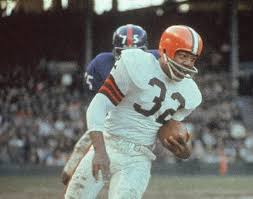 |
| Jim Brown (Hall of Fame): that bum would be a bust in "the modern game"! 3 |
“HE WOULD HAVE DOMINATED IF HE PLAYED BACK THEN” GUY (OR “HE WOULD HAVE DOMINATED THESE NEW GUYS” GUY)
This is often the same guy as “He Wouldn’t Survive Today” Guy. If so, point out that if said athlete played back then, that his achievements should be discounted because he wouldn’t have been playing in the modern era. End of discussion. If this person’s bias only runs one way, suggesting that modern athletes would have dominated in the past, take the same approach out lined for “He Wouldn’t Survive Today” Guy. You’ll never win.
 |
| Bear Bryant: His legacy spawned off generations of this type of guy in Alabama. 4 |
“I AM SMARTER THAN YOU” GUY
There is always a guy who has been everywhere and seen everything. Because he has, his opinion is worth more than yours and he will tell you so. If you are debating this guy in an online chat room or fan forum, a simple “fuck you,” followed by moving on to another topic will suffice. If you are debating personal friends and acquaintances, more tact is in order.
 |
| Complete tool 6 |
The best way to handle this guy, should you choose to do so, is to keep him on topic. “I am smarter than you,” is a distraction technique. It’s irrelevant. The topic is sports, not who had the better ACT score. Force his hand and make him defend his statement, if he is so smart.
This guy is abrasive, by the very fact he would suggest he knows more than you (often without knowing what you do or don’t know) and you can expect some tense, heated moments with him. But we are MEN. We usually cannot let a guy earn stripes at our expense in a sports discussion!
 |
| There's always one. He knows it all, except how to get a girl! 5 |
“I AM OLDER THAN YOU” GUY
 |
| "Joe Louis was 137 years old!" 7 |
This is the guy who has a few years on you or the group and his method of propelling his argument and discounting yours is the fact that he saw certain players play and certain events when the activity took place. Like a lot of debating styles, this guy has strengths and weaknesses.
When evaluating a cultural or societal response to an athlete, this person’s opinion, in a vacuum, does hold more weight than a person who did not see and experience a certain performance with comprehension and maturity. This guy, however, thinks that “more weight” means his opinion is the only one that counts. Two-hundred-ten pounds is more than 200 pounds, but it is not a monumental difference. A better informed younger person, for example, is more credible than an ignorant person who watched events unfold without seeing the bigger picture.
Likewise, he thinks that because he saw an athlete from a past era play in person or on live television and you didn’t, he knows more than you about the athlete and any topic involving that athlete as a whole. Again, there is some merit to that point, but it does not give Old Guy carte blanche to dominate the discussion with questionable, stretching-reality opinions. Someone who watched Kiki Wandeweghe play in the 1990s can argue with an 18 year old that Kiki was a better player than LeBron James, but nobody is listening, not even Kiki.
 |
| Kiki Vandeweghe: last name, "Ever", first name, "Greatest"? 9 |
STATS GUY
 |
12 |
There is always one like this in every discussion. This is often one of the stronger debaters because Stats Guy is backing up his argument with facts. However, there are lies, damned lies, and statistics. This guy, too often, can get caught up in the minutia of numbers while ignoring the eyes test and not analyzing what the numbers are actually telling us.
This guy can be a tough sell. You can talk all day about what “could have” “should have” and “would have” happened until you are blue in the face. The scoreboard is the final arbiter in any athletic contest. This guy, however, often tries to propel a weaker argument by manipulating the numbers and trying to convince the group that the numbers are saying more or less than they really are.
Knowledge is power. The only way to beat this guy is to know some stats of your own and either directly rebut Stats Guy or manipulate some numbers of your own to put him back on his heels. Remember that Daunte Culpepper had the seventh best single season QB rating in NFL history. He will not be fitted for a crème colored jacket or a have a bust in Canton, Ohio one day.
 |
| "He whipped Joe Louis' ass!" 8 |
STATS DON’T COUNT GUY
This is the guy who often doesn’t want to listen to facts or reason if you support your argument with statistics. This is not the antithesis of Stats Guy. Stats Guy goes through analysis paralysis with numbers, but at least is dealing with irrefutable, objective facts. Stats Don’t Count Guy is throwing critical thinking to the wind. His entire position is, often, “That isn’t how I see it.” Try to steer this guy into backing up his claims and comparisons with something of substance. If that does not happen, do not bother engaging this guy. It is his way or the highway.
 |
| This guy isn't hearing or seeing your point. 10 |
“I PLAYED THE GAME” GUY
 |
| All Pro? More like, "All JV". 13 |
This is another example of a person whose life experience does, in fact, add to his credibility. This guy played the sport in question in an organized manner and (presumably) for an extended period of time and (presumably) you did not if he plays the “I played the game,” card. When that card is played, you had better have a strong position, know what you are talking about, and be able to back it up. Because this guy did, in fact, play and you didn’t.
Often, the only weakness this guy exhibits is when he tries to extend his credibility further than he is entitled to. A four year letterman on his high school football team, who did not play in college, probably can spot a flawed fundamental blocking or tackling technique, at any level, that you cannot identify if you never played at that level. He has very little credibility over you in discussing the degree of difficulty of executing a punt return in the NFL. Put this guy in his place when he steps out of place.
 |
| The female counterparts to the dudes still reliving their high school glory in sports debates. 11 |
I’M THAT TYPE OF GUY
I hope you enjoyed this light hearted piece on different kinds of sports debate guys. Chances are you have encountered every last one of these guys and see some of these guy in yourself. Or maybe you said, “Hey…that’s ME he talking about!” The Hat Trick will look into some more angles of evaluating greatness in sports. I hope that this opening salvo lightened the mood before we get into some more meat and potatoes discussion in future editions.
Don't forget to vote in the fan polls!
To advertise with The Daily Hat Trick, or to submit a guest column, please contact the editor at eric@thedailyhattrick.info.
The Daily Hat Trick is sponsored by
Sports N Stuff. For great deals on jerseys, shirts, cologne, and other guy stuff, visit
http://www.sportsnstuff.biz/.
1) Image from http://content.usatoday.com
2, 4) Image from www.bleacherreport.com
3) Image from www.cleveland.com
5) Image from www.motifake.com
6) Image from www.princetontourcompany.com
7) Image from http://kynchsbruinskorner2.blogspot.com
8) Image from http://rss.listal.com
9) Image from www.nysun.com
10) Image from http://80sand90sactioncomedies.blogspot.com
11) Image from www.highfashiongirl.com
12) Image from http://blog.revolutionanalytics.com
13) Image from www.flickr.com


 For those times when you can’t be at the stadium to tailgate, you can still meet up with fellow alums to eat, drink, and cheer on your team. No matter where you go, you never have to miss another tablegate thanks to this app and its “Find Your Fans” feature.
 Also freely available on Android, iPhones, and Windows phones, ScoreMobile is a consistent college sports fan favorite. If you’re busy, set the app to text you when someone scores, when a quarter ends, or just at key moments in the game. It also sports immediately updated stats, betting odds, league leaders, and more.
 ESPN may be the news leader, but Sporting News trumps them when it comes to apps. For all your men’s college hoops scores, videos, and news, including the ability to customize your feed to news from your favorite teams and conferences, this app’s where it’s at.
 Use your Android text-to-speech functionality to turn a college baseball gamecast into a live play-by-play audio broadcast with this cool app. If you’re more concerned with what’s going on across the conference, set the app to a league scoreboard and receive notifications when a game you’re interested in starts, ends, or changes score.
 Play music from your iTunes library while you lead your alma mater to victory with this popular video game-cum-mobile app. Go head-to-head with a friend via Bluetooth or tackle the computer in season mode on your way to the BCS title game.
 Most fans of college sports also follow the pros, which is why Sportacular is so cool. When you’ve caught up on NCAA football or basketball updates, you can switch over to NASCAR results, the LGPA leader board, LA Liga soccer standings, and basically everything else.
 The CSF app adds some fun features to the scoreboard app like the ability to share scores to Facebook and Twitter without leaving the app, and previews of upcoming games. Track up to 10 of your favorite teams at a time, and find scores from across the conference while viewing your teams.
 Originally made for coaches and sports journalists, die-hard fans of the best league in NCAA football can use this killer app to find updated injury reports, recruiting news, videos, and game previews. No sports fan in the Southeast should be caught dead without it.
 If their 2012 men’s basketball championship has you on the fan bandwagon, you’ll want to download this app. It connects you with Kentucky sports radio podcasts and posts that you can share with your friends, and lets you join the conversation with other UK fans.
 College coaches already know about
  With this app, your iPhone becomes a scorecard for tracking every play your favorite college baseball or softball team makes. Track hit locations with the batting spray chart and pitch locations with the pitch tracker, and Twittercast the plays to your followers who couldn’t make it out to the ballpark.
 Sports blog
  For up-to-the-minute D1 football news, scores, and highlight videos, this app is a no-brainer. It’s easy to use, has a smooth interface, and gets great update support from the developers. If you’ll be working or studying on Saturdays come September, you’ll want to have this app in your pocket.
 Assuming its
  Show your school spirit on your phone by downloading this app that connects you with live wallpapers of your team’s logo and the school fight song for your ringtone. Users say if your alma mater isn’t listed, drop the designers a line and they’ll have it added quickly.
 The coolest feature of this app is the ability to follow the Facebook and Twitter feeds of some of the best or most promising players in college basketball, like Jared Sullinger, Adonis Thomas, and Shabazz Muhammad, all in one place. There’s also score updates, news alerts, and the ability to customize posts from your favorite college hoops blogs.
 tagline for this free app is “Where Sports Get Social.” College and pro teams are using the app more and more to reach their fans via the new medium of mobile apps. Sign into Facebook and join public conversations about your team, or start private ones with friends, plus get live scores and stats for thousands of games in a variety of sports.
 ESPN cracks our top 20 with this offering that keeps you up to speed on the college football teams headed for bowl glory. Experts Brad Edwards and Mark Schlabach bring you their weekly predictions in the Bowl Central feature. You can also track the race to the big awards like the Heisman, and view all the tweets pertinent to your favorite team.
 Don’t knock radio; you’ll be glad to have this app when the power goes out during the game. Delivering hundreds of radio broadcasts of both college and pro football games across the country, Football Radio includes a game schedule so you’ll never miss a down. You can let it run in the background on your phone while you text or surf the web.
 Stats junkies, listen up. This is your best option for viewing stats for college football teams, conferences, and individual players going all the way back to 2003. Win/loss records, passing and rushing numbers, even video highlights are all here. And the coolest part of all is it’s free!


